The founder who says “AI runs our events”
Every few weeks, I hear some version of this:
“We use AI to run our event strategy.”
Usually that means:
-
They have Claude, ChatGPT, Gemini open in a tab.
-
Their event data, CRM, and spreadsheets are sitting in ten other systems.
-
The “strategy” is whatever one model returned in three seconds.
Then they hit reality:
-
A big flagship event underperforms.
-
Sponsors ask hard questions about ROI.
-
Sales teams still don’t know which attendees actually matter.
AI didn’t fail them. Their lack of a real event strategy did.
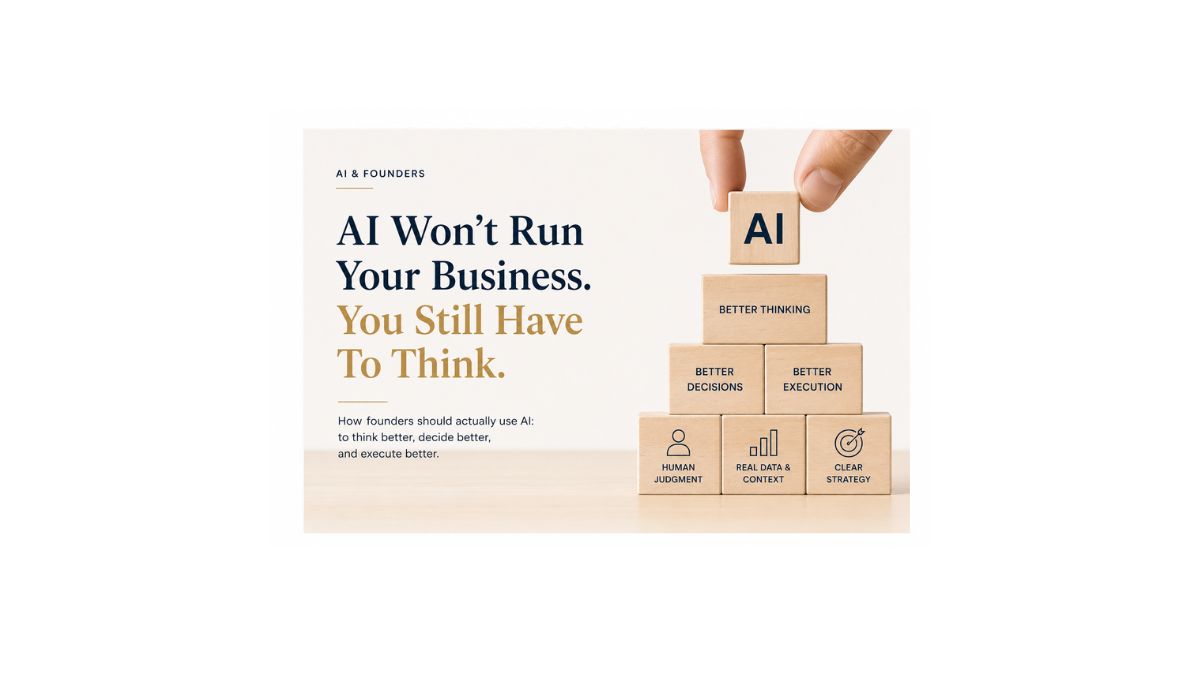
AI will not run your events. It will simply make very clear whether you’re actually doing the work.
Two tracks: AI noise vs AI that touches real events
In events and SaaS, I see two kinds of people talking about AI:
Track 1: The noise‑makers
-
Know very little about the subject matter.
-
Trade in curiosity, gossip, and doomsday narratives.
-
Push “AI will replace planners” or “nobody will have jobs” with no real evidence.
Their content gets engagement. It rarely helps a single event organizer.
Track 2: The builders and serious users
-
Use AI daily in research, analysis, and planning.
-
Contribute actual improvements to products and workflows.
-
Focus on how AI turns event data into better decisions.
In event tech, you want to be in the second track. AI doesn’t make up for weak thinking. It magnifies the quality of your thinking – good or bad.
Where AI is genuinely useful in event strategy
Let’s talk about what AI is actually good at in an event‑driven SaaS business.
1. Turning event data into strategy inputs
Event platforms are rich with data: registrations, attendance, session engagement, sponsor ROI, vendor costs, NPS scores.
AI tools are strong at:
-
Summarizing attendee behavior across many events.
-
Comparing vendors and sponsors across years.
-
Surfacing segments that engage heavily but never convert.
This is where AI belongs: in the analysis layer, giving founders better raw material.
2. Drafting scaffolding, not finished strategies
If you ask an LLM for a 3–6 month event marketing plan, it will produce:
-
Reasonable phases: awareness, nurture, conversion.
-
Suggested channels: email, social, webinars, partner co‑marketing.
-
Basic content ideas that fit the industry.
This is useful scaffolding.
It is not your final strategy.
The final strategy has to:
-
Reflect your actual pipeline goals.
-
Factor in internal constraints (team, budget, legal, product).
-
Align with your attendees and sponsors, not some generic persona.
AI does not see all of that. You do.
The execution gap: why “AI runs our events” fails in the real world
Where I see founders get hurt is at the execution layer.
High‑level plans vs ground truth
Ask AI to plan a rollout and it will give you a clean, high‑level timeline. But when you try to execute it:
-
Real‑world traffic doesn’t match the forecast.
-
Speakers drop, venues change, budgets move.
-
Internal meetings and politics reshape what’s possible.
AI doesn’t know your CFO’s mood, your sponsor’s hidden agenda, or your legal team’s red lines. It’s working off whatever data you gave it, plus public patterns.
That’s why treating an AI‑generated plan as “the strategy” is dangerous. It will always be missing the messy 20% that decides whether a real event works.
Development and product work
I’ve seen the same pattern in development:
-
AI can generate code and boilerplate.
-
Under real load or edge cases, holes and inconsistencies appear.
You still need engineers to decide:
-
Which trade‑offs are acceptable.
-
How to handle edge scenarios with real users.
-
Where performance and security actually matter.
Discipline vs low‑effort AI: how the difference becomes visible
AI has changed workflows enough that you can clearly see who is disciplined in your team and where low‑effort AI is creeping in.
Disciplined AI usage
Disciplined people:
-
Have a strong mindset and don’t mind putting in effort.
-
Use multiple models (Claude, ChatGPT, Gemini) and compare outputs.
-
Consolidate the best ideas and then scrutinize them before delivering.
They treat AI as:
-
A way to quickly gather perspectives.
-
An assistant for summarizing complex inputs.
-
A tool to accelerate thinking, not replace it.
The work they ship is faster and better.
Low‑effort AI usage: the rise of AI slop
Low‑effort AI usage looks like this:
-
Going to a single model, pasting the problem, copying the output, and shipping it unedited.
-
Using AI responses as decisions without validation or context.
-
Treating “the AI said so” as a substitute for actual judgment.
This is what I call AI slop: low‑effort, generic, context‑less output that could belong to any company, in any industry, in any year.
In events, AI slop shows up as:
-
Strategies with no reference to real attendee or sponsor data.
-
Decks full of buzzwords, no actual numbers.
-
Playbooks that ignore venue constraints, team capacity, and budget reality.
AI didn’t create the slop. It just made it faster to produce.
The piece everyone is missing: attendee journeys + AI
Most event AI conversations focus on:
-
Chatbots.
-
Scheduling.
-
“Personalization” that mostly means changing first names in emails.chetu+1
The piece I see underused is the attendee journey:
-
How organizers record interactions across every touchpoint.
-
How they reward attendees for showing up and engaging.
-
How they move those relationships from “event attendee” to “customer, partner, or advocate.”
Without a clean, 360‑degree attendee profile, AI is guessing. With it, AI can:
-
Identify attendees who consistently show up but never get real follow‑up.
-
Highlight segments that are over‑represented at events but under‑represented in pipeline.
-
Suggest post‑event motions that build revenue, not just registrations.remo+1
That’s why, on the product side, we’ve invested in deep attendee data instead of chasing surface‑level “AI features.”
A founder framework: how to actually use AI in event SaaS
If you want AI to help your events instead of turning your output into low‑effort noise, here’s a practical approach.
1. Start with specific event problems, not vague “AI goals”
Ask targeted questions like:bizzabo+1
-
“Which events created the most pipeline per attendee?”
-
“Which sponsors’ ROI has quietly declined over the last three years?”
-
“Which attendee segments engage heavily but never become customers?”
Use AI to dig through your event + CRM data, then validate those answers yourself.
2. Use multiple models, then synthesize
For anything strategic:
-
Run the same prompt through Claude, ChatGPT, Gemini.
-
Compare how each frames your problem and suggests solutions.
-
Build your own synthesis based on what you know about your company, market, and events.
This turns AI into an advisory panel, not a single oracle.
3. Keep humans owning execution
Make human oversight a non‑negotiable step:planning.
-
Engineers own final code.
-
Marketers own final copy.
-
Event operators own final timelines and logistics.
AI can write drafts, summarize, and suggest. Humans decide what ships.
4. Audit for low‑effort AI every quarter
Ask yourself:
-
Where are we copy‑pasting AI output directly into production?
-
Which deliverables could belong to any generic SaaS company?
-
Which “strategies” do not reference a single internal data point?
Anywhere the answer is “yes,” raise the bar. Tighten review, improve data foundations, and require a human layer of thinking before anything goes out.
Will AI take over event strategy?
The loud narrative says AI will replace planners, eliminate jobs, and run events end‑to‑end.
My view is simpler:
-
Like every major technology shift, AI will remove some roles, reshape others, and reward people who adapt.
-
The jobs most at risk are the ones where people already aren’t thinking – they’re just executing templates.
-
Founders and teams who build strong data foundations and use AI to make better decisions will be fine. The rest will blame AI for outcomes they created.
AI won’t run your events.
It will make it obvious who has real strategy, judgment, and discipline – and where low‑effort AI has quietly taken over the work.